Video Drum Lessons vs a Real Teacher: An Honest Comparison
29 June 2026
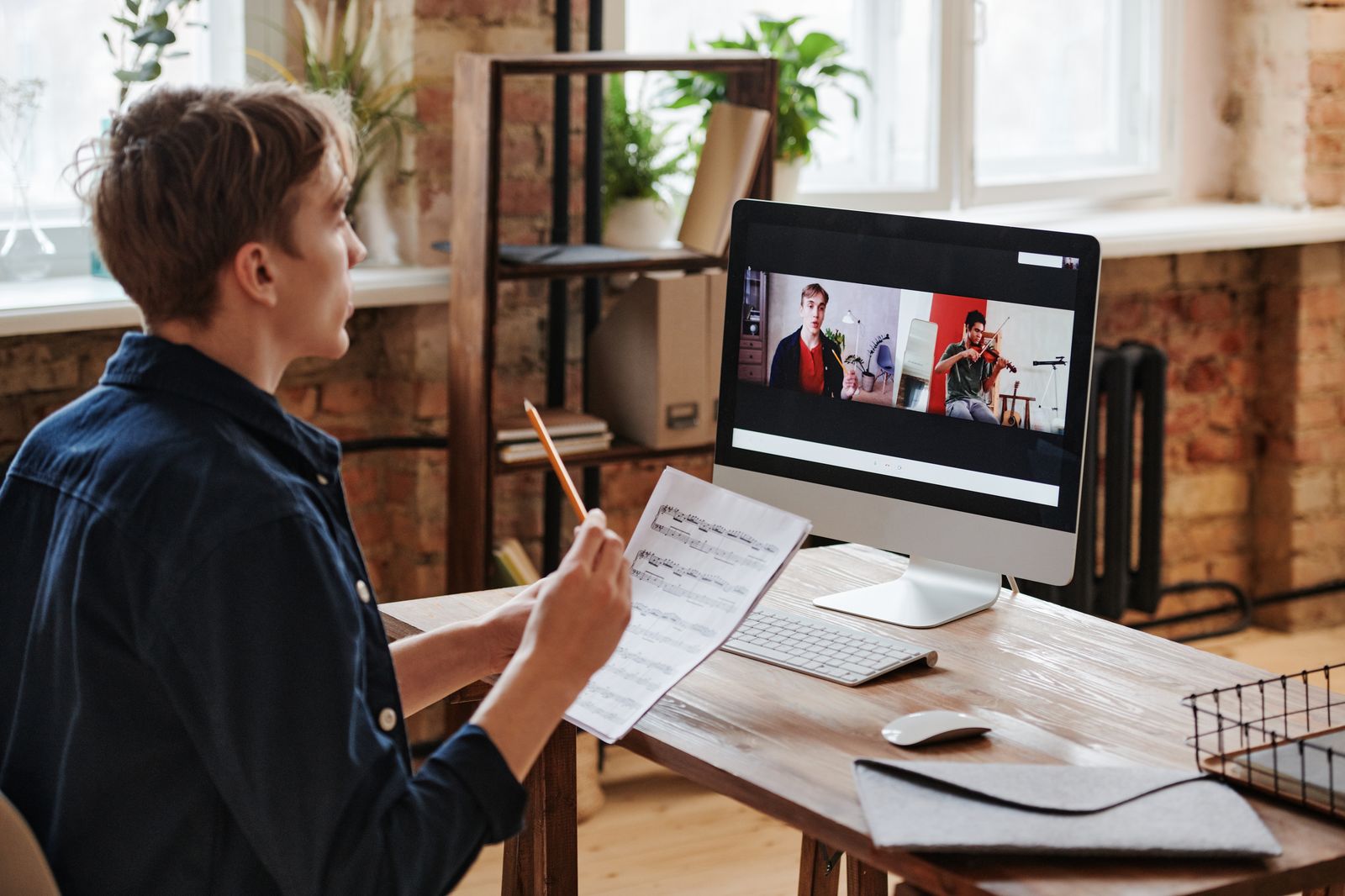
YouTube has millions of free drum tutorials. Apps offer structured courses for a few euros a month. Online teachers will give you a live lesson via video call. And a teacher in the same room costs more than all of them.
So what are you actually paying for? And when is the free option genuinely good enough? Here's the comparison I'd want to read before making the decision.
What Video Lessons Do Well
The volume of available content is remarkable. Every style, every technique, every famous drum part — someone has filmed it. If you want to learn the intro to Led Zeppelin's "When the Levee Breaks" or understand what a paradiddle is, the video exists and it's free.
For intermediate and advanced players, this is genuinely valuable. Someone with solid fundamentals can watch a lesson on jazz brushwork or polyrhythm, understand what's being demonstrated, and go apply it. The video format works well when you already know how to learn.
Accessibility is real too. You can watch at 2am, pause and rewind, watch the same moment twenty times. A human teacher cannot do that.
What Video Lessons Cannot Do
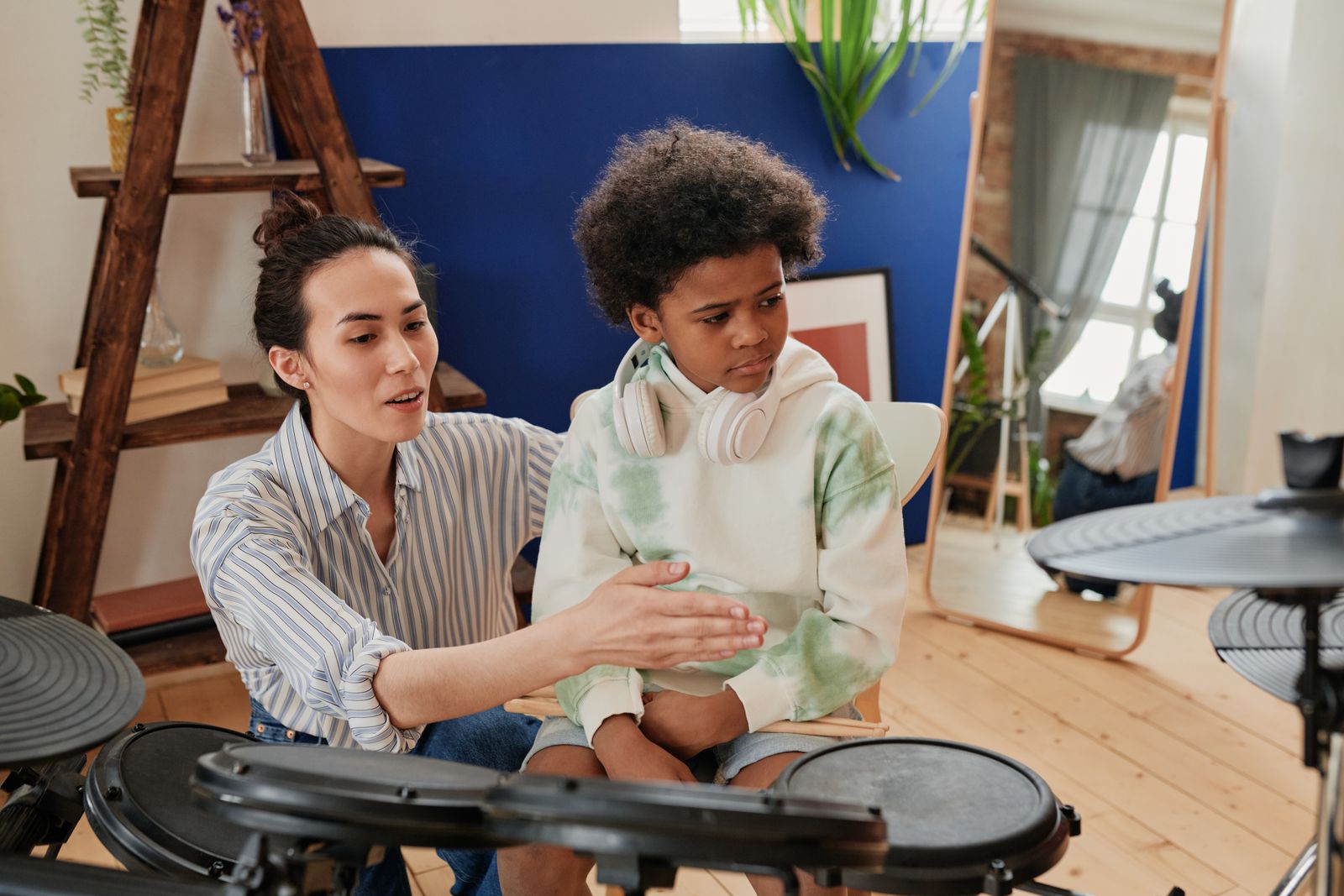
Watch your hands. This is the problem.
A video cannot see that you're gripping the stick too tightly. It cannot see that your wrist is rotating the wrong way, that your elbow is raised when it shouldn't be, or that your left foot isn't actually doing what you think it's doing. It presents a model. It cannot verify whether you're matching it.
For complete beginners, this gap is not minor. Technique errors in the first few weeks become deeply ingrained habits. The grip you develop in month one, the way you instinctively reach for the hi-hat, the position of your shoulder — these become automatic very quickly. If they're wrong, they stay wrong until someone in the room points at exactly the problem.
I've had students come to me after six months of YouTube learning who could play recognisable rhythms but had wrist angles that would cause injury within a year of serious practice. None of the videos had told them. The videos couldn't tell them.
Video lessons also cannot adapt. A YouTube lesson is made for an imaginary average beginner. Your specific problem — the reason your left foot won't cooperate, why your fills always rush — is yours. A video addresses the general case. A teacher addresses you.
The Cost of Self-Teaching
Learning anything from video has a hidden cost: you don't know what you don't know. A complete beginner has no framework for evaluating whether their technique is correct. Everything feels normal because you've never felt anything different.
This means errors accumulate silently. And the longer they accumulate, the more expensive they are to fix. A bad grip learned in week one takes three to four weeks to correct if caught in month one. The same bad grip discovered after a year of practice can take months to fully retrain — because the wrong motion is now deeply automatic.
Good lessons don't just teach forward. They prevent the correction cost later.
When Video Is Enough
If you already have solid technique from real lessons — yes, use YouTube freely. It's an excellent supplement. I use it myself to look at new concepts or see how different players approach a problem.
If you're an intermediate player looking for a specific song or technique, video works well. You have the foundation to evaluate what you're seeing.
If you're exploring whether drumming interests you at all, a few YouTube videos are the right starting point before committing to anything.
The Hybrid That Actually Works
Individual lessons for the first six months — to build correct technique, establish good habits, and get the fundamentals solid. Then YouTube, apps, and video content as ongoing supplements. The combination is much stronger than either alone.
That's how most serious players learn: a teacher gives them the foundation and corrects what they can't self-diagnose, and they use every other resource available to explore further.
The trial lesson is 45 minutes and €10. It's a low-cost way to experience the difference between watching and being seen.