How to Practice Drums Without a Kit at Home
29 June 2026
No drum kit at home is the most common reason people delay starting — or stop practising between lessons. It's a real constraint. But it's not the obstacle it seems. Here's what actually works.
The Practice Pad: The Most Useful Thing You Can Buy
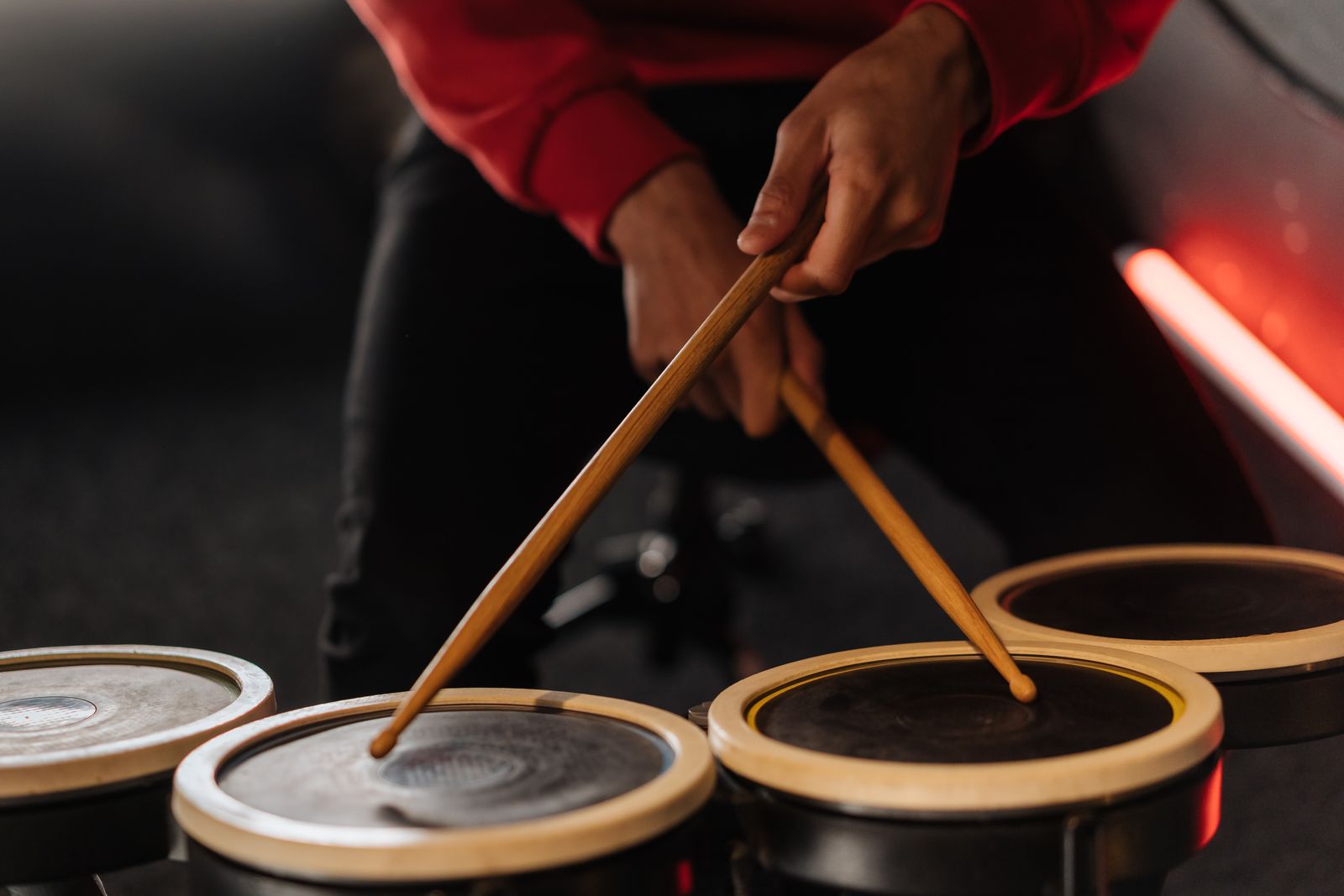
A practice pad is a rubber or mesh disc that responds like a drum head. It sounds nothing like a drum — it's quiet, compact, and costs between €15 and €30. It is also the most efficient practice tool for a beginning drummer.
What you can work on with a pad: grip, stroke technique, rebound control, rudiments, timing with a metronome, independence of your two hands. This is the bulk of what determines your drumming ability. The pad handles all of it.
What a pad can't do: give you foot coordination or the full-kit experience. Bass drum pedal, hi-hat foot, the spatial awareness of navigating a full setup — these need an actual kit. That's what lessons are for.
A practice pad and a pair of sticks for €30–50 total is the most cost-effective entry point into drumming that exists. If you're waiting to buy a kit before starting, stop waiting.
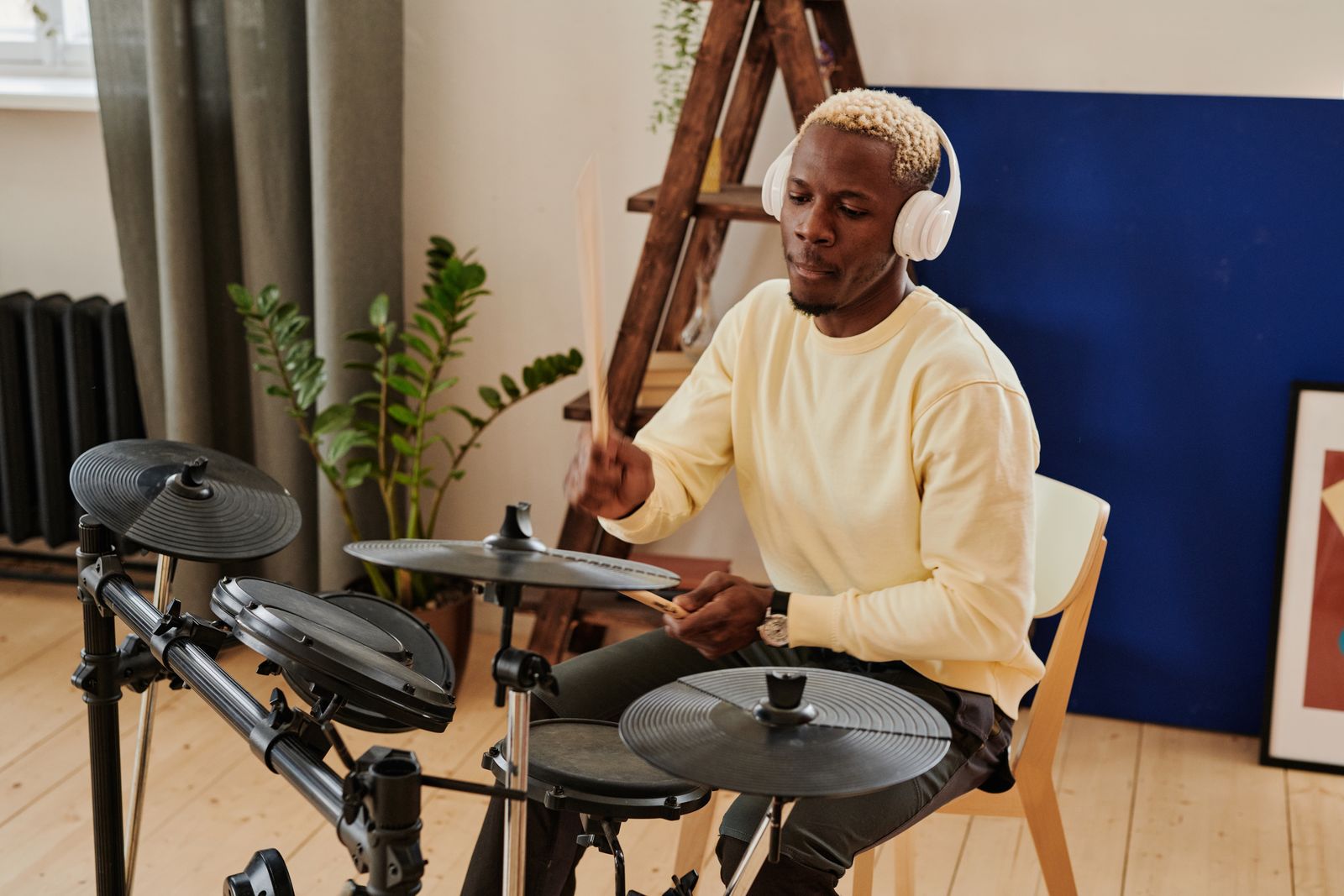
Electronic Drums with Headphones: The Home Kit That Works in a Flat
If you want a full-kit experience at home without disturbing anyone, a mesh-pad electronic kit is the realistic answer. The mesh heads absorb most of the impact sound — what remains is the mechanical click of the pedal and the stick hitting the pad, not the acoustic boom of a real drum.
Entry-level mesh-pad kits (Roland TD-1K, Alesis Nitro Mesh, Donner DED-200) cost €450–€900. They are a meaningful investment. But if you're serious about practising at home, they solve the problem that no other option fully solves.
A few things to know: rubber pad kits (cheaper) are significantly louder than mesh. The difference matters when neighbours are involved. If you're buying electronic for home practice, mesh pads are worth the extra cost.
Practising Without Any Equipment
Before you have anything at all — a pillow, your knees, a stack of books. Every drummer has done this.
Pillows and soft surfaces are actually useful for one specific purpose: developing touch. Because a soft surface has no rebound, you can't rely on the stick bouncing back. Every stroke has to be controlled from the beginning of the motion, not rescued at the end. This builds cleaner technique than most beginners expect.
The limitation is obvious — no feedback on sound, no real rebound simulation, no foot coordination. But for working on hand independence or simply maintaining a habit between sessions, it costs nothing and requires nothing.
A 20-Minute Daily Practice Routine on a Pad
Structure matters more than duration. Here's a basic 20-minute session that builds real skill:
Minutes 1–5: Warm-up. Single strokes, slow and even. Right-left-right-left at a tempo where every stroke feels identical. Focus on the rebound — let the stick come back naturally, don't muscle it back.
Minutes 6–10: Rudiments. One rudiment per session, repeated until it feels smooth. Start with single strokes, double strokes, and the paradiddle (RLRR LRLL). These are the building blocks of everything.
Minutes 11–15: Rhythm patterns. Play the patterns from your last lesson. Count out loud if you need to. The goal is consistency, not speed.
Minutes 16–20: Free play. Whatever feels good. Play along to music mentally, improvise, experiment. This is where things get consolidated.
Twenty minutes, five days a week. That's the minimum for visible progress. It's also genuinely achievable.
What Lessons Provide That Home Practice Can't
A practice pad gives you hands. Lessons give you everything else.
The full-kit coordination — bass drum, hi-hat foot, snare, toms, cymbals all in the same physical space — only exists on an actual kit. The spatial memory of knowing where each piece is without looking. The sound of a real drum in a real room. The immediate feedback of someone watching your technique.
This is why lessons and home practice aren't alternatives to each other. They're the same arc, split across two locations. Practice at home builds the hands. The lesson builds everything else — and makes sure the hands are building correctly.
If you're in Sofia and want to start — bring your practice pad to the trial lesson. We'll work with what you have.