What Happens in Your First Drum Lesson
29 June 2026
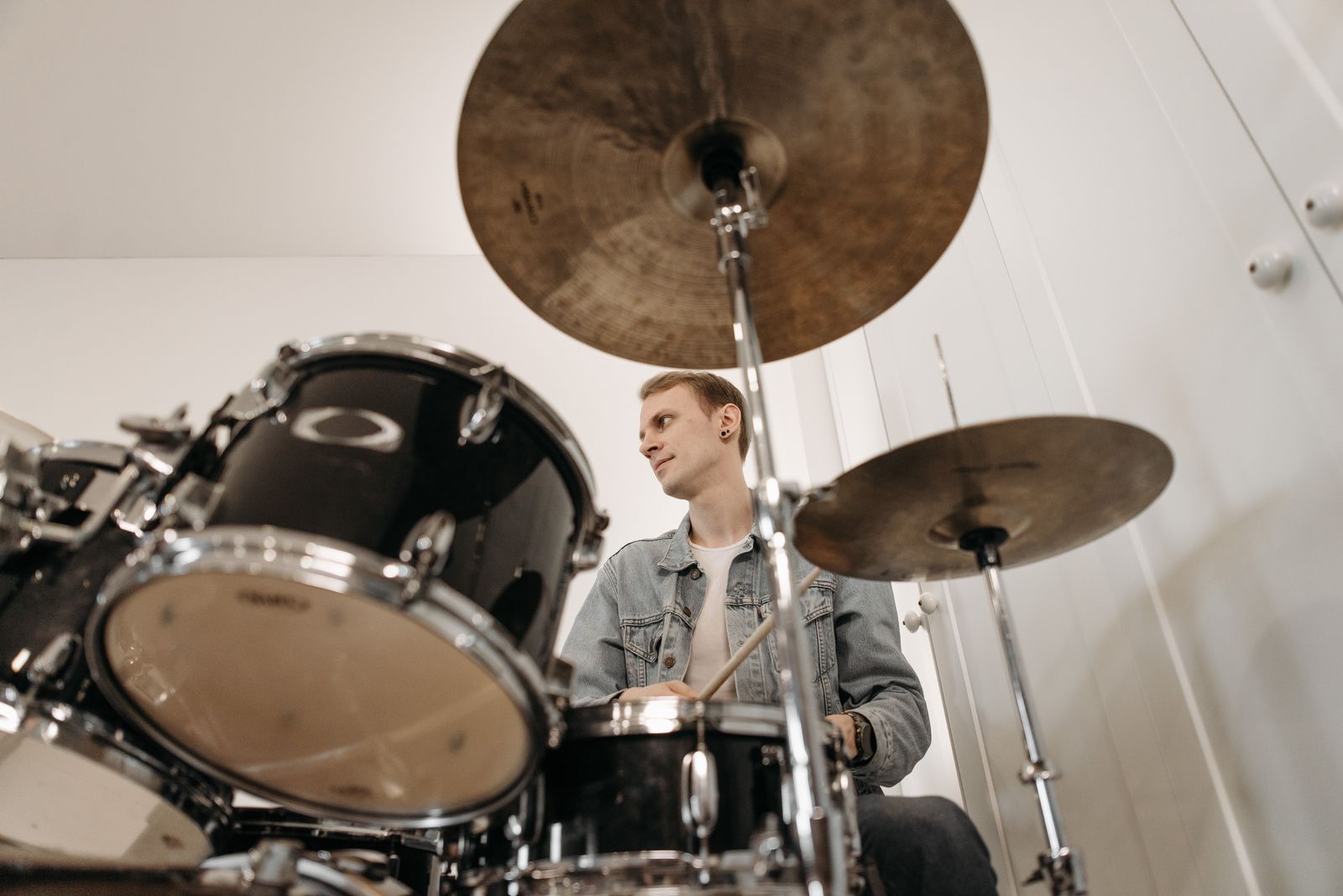
Most people arrive at a first lesson with two things: mild excitement and a vague fear that they'll embarrass themselves. Both are completely normal. Neither lasts past the first ten minutes.
Here's exactly what a first drum lesson looks like — so you know what you're walking into.
Before You Sit at the Kit
The first few minutes are a conversation. I want to know why you're here, what music you listen to, whether you've touched drums before, and what you'd actually like to be able to play.
This isn't small talk. It directly shapes everything that follows. A 35-year-old who wants to play classic rock at home needs a different first lesson than a 19-year-old who wants to eventually play in a band. Same instrument, different starting points.
You don't need to bring anything. No sticks, no notebook, no prior knowledge. If you have sticks already, bring them — but it's not required.
Sitting at the Kit for the First Time
The first thing we sort out is posture. Where you sit relative to the kit, how high the throne is, how close the bass drum pedal is to your foot. None of this is complicated, but all of it matters — bad posture at the start means correcting it later.
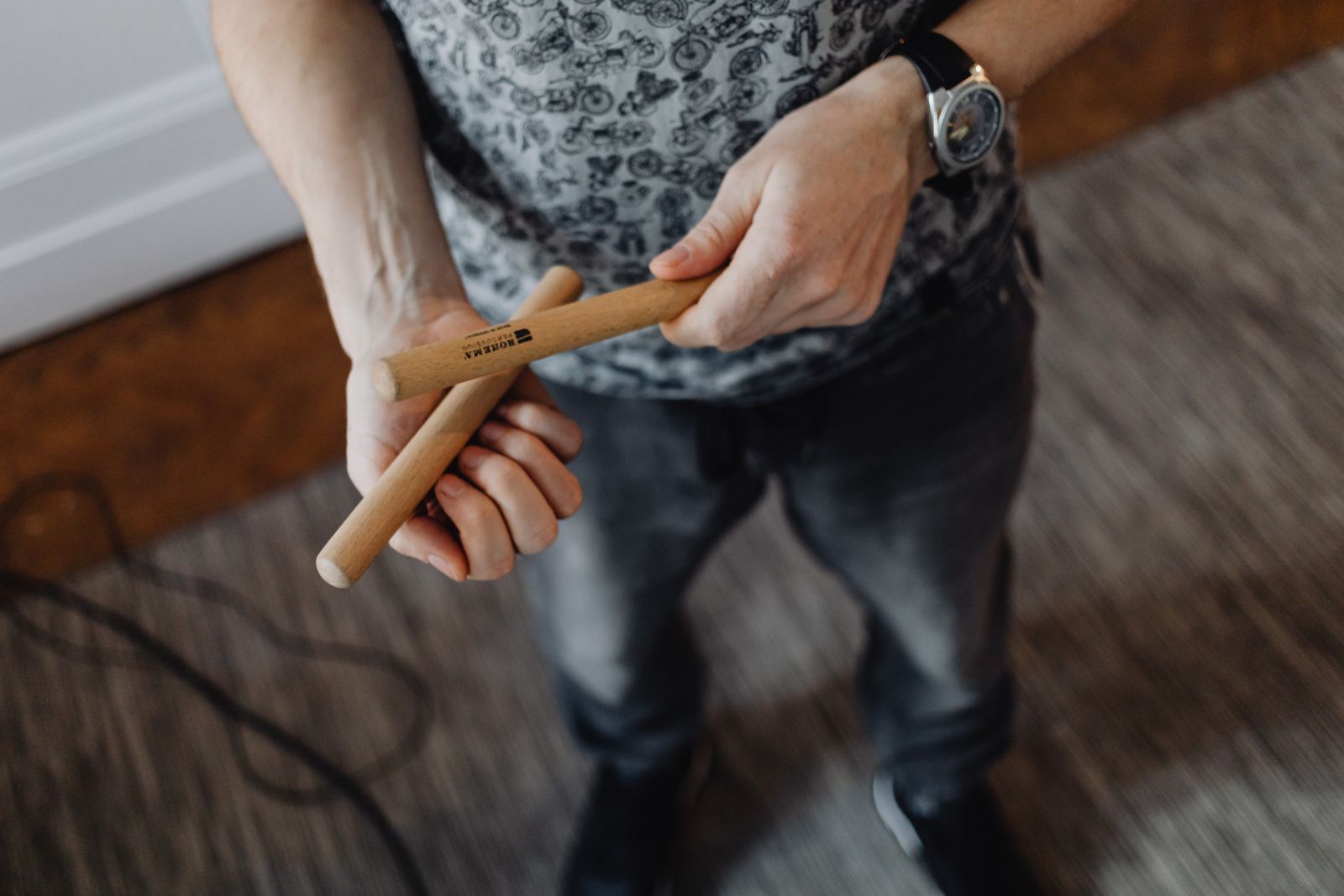
Then grip. How you hold the sticks. There are two main styles — matched grip and traditional grip — and for most beginners, matched grip is where we start. I show you once, you try it, we adjust.
Then the first strike. You hit the snare drum. You hear what it does. Something usually changes in people's faces at this moment — the sound is different when you're the one making it.
What You'll Actually Play
By the end of a 45-minute first lesson, most students are playing a basic rock beat: hi-hat on every beat, snare on beats two and four, bass drum on beat one and three. It's simple. It's also the foundation of thousands of songs.
We work up to it in steps. Right hand on the hi-hat first, keeping a steady pulse. Add the snare. Add the bass drum. Each layer by itself, then together. The coordination feels strange at first — your hands and feet are used to working independently. That's normal and expected.
Some students get all three layers in the first lesson. Some get two. Both outcomes are completely fine. The point isn't to rush through a checklist; it's to leave with something real that you can practise.
What Doesn't Happen in the First Lesson
No sheet music. Reading notation comes later — and for many styles, it never needs to come at all.
No lectures about music theory. Theory is introduced when it directly helps you play something you're working on, not before.
No judgment about where you are. Everyone starts from zero. The only question I'm interested in is where you want to go.
What Comes After
You'll leave with one specific thing to practise — usually the basic beat, simplified if needed, with a clear instruction on how to do it at home. A practice pad and sticks are enough; you don't need a full kit to work on the fundamentals.
The second lesson picks up from there. We check what stuck, fix what drifted, and add the next layer.
If you've been sitting on the decision — the trial lesson is 45 minutes and €10. You play, you ask anything you want, and you decide from there.