Buying Your First Drum Kit: How to Avoid Wasting Money on the Wrong One
29 June 2026

The most expensive mistake beginners make isn't buying the wrong kit. It's buying a cheap kit that actively makes learning harder — and then assuming they're the problem.
I've seen it repeatedly: someone spends €150 on the lowest-tier acoustic set they could find, the heads are unresponsive, the hardware is loose, the cymbals sound like bin lids — and three months later they've stopped playing, convinced they have no talent. They didn't lack talent. They had an unplayable instrument.
Here's what you actually need to know before you spend anything.
Why Cheap Kits Work Against You
A starter drum kit needs to do one thing well: respond honestly to how you hit it. When you strike a drum head, the rebound should be clean and consistent. The tension should hold after tuning. The pedal should feel smooth.
Very cheap kits — anything below roughly €250 for acoustic — fail on all three. The heads are too thin and die within weeks. The lugs strip. The bass drum pedal has uneven resistance that teaches your foot the wrong muscle memory from day one.
This is not snobbery about brands. It's physics. A kit that doesn't respond correctly will teach you incorrect habits that take twice as long to undo.
What a Decent Starter Kit Actually Includes
A complete acoustic starter setup includes: bass drum, snare, two rack toms, one floor tom, hi-hat stand and cymbals, crash cymbal, ride cymbal, bass drum pedal, and a throne (stool). Most "complete" kits sold at this level include all of this — but quality varies enormously within the same price bracket.
What matters most at this stage: the snare drum and bass drum pedal. These are where your hands and foot learn their fundamental mechanics. A bad snare and a sluggish pedal will cost you more in bad habits than any other component.
For electronic kits, the equivalent priorities are the snare pad sensitivity and the kick pedal feel. Mesh pads beat rubber pads every time for realistic rebound.
Price Ranges: What You Actually Get
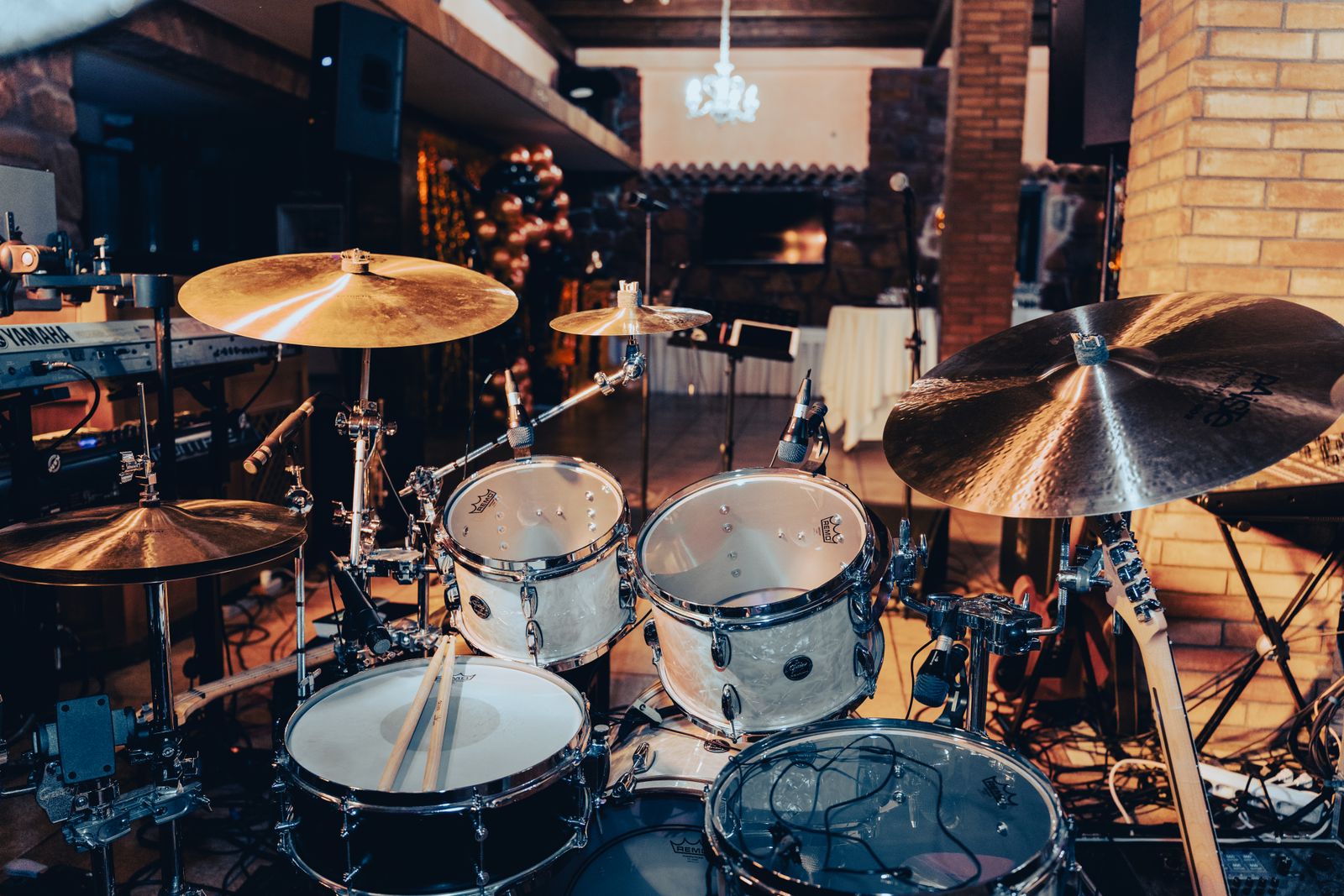
Acoustic — €150–250: Avoid. These are toy-grade instruments sold to first-time buyers who haven't been given any guidance on what to look for. The hardware will fail, the heads will deaden, and the cymbals are not worth the metal they're pressed from.
Acoustic — €300–600: This is where playable kits begin. Brands like Pearl Roadshow, Tama Imperialstar, and Ludwig Accent at the lower end; Mapex Tornado and Sonor AQX in the middle. The hardware is real, the heads can be tuned and replaced affordably, and the pedal will develop your technique correctly.
Acoustic — €600–1,200: Professional-grade starter territory. You're buying a kit you won't need to replace for years. Worth it if you're serious and have the space.
Electronic — €400–700: Entry-level mesh-pad kits (Roland TD-1MK, Alesis Nitro Mesh). Usable, quiet enough for an apartment, limited dynamic range but functional for learning.
Electronic — €800–1,500: The gap where the experience changes meaningfully. Better module, more realistic response, proper hi-hat feel. If you're going electronic, this is the bracket that makes it genuinely enjoyable.
New vs Second-Hand

Second-hand is almost always the smarter choice at the beginner level — with one condition: you need to inspect it in person or have someone who knows drums check it for you.
What to look for on a used acoustic kit: check that the lugs turn freely and hold tension, inspect the bass drum hoop for cracks, press the kick pedal a few times and listen for grinding, check the hi-hat clutch. A kit in good condition at half the new price is a better deal than a new kit at the same money.
For electronic kits: test every pad, check the module for dead zones or input lag, and confirm the kick pedal isn't worn through.
The Alternative Nobody Mentions First
If you haven't yet started lessons — or you're in the first two to three months — you don't need a full kit at all.
A practice pad (around €20–35) and a pair of sticks is enough to develop stick control, grip, and basic coordination. The rebound on a good practice pad is actually closer to a real snare than most cheap drum heads. It's quiet enough to use in any room. And it costs less than a single lesson.
When my students ask whether they should buy a kit before their first lesson, my answer is always the same: come to the studio first. Use my kit for the first month. Learn enough to know what you're buying. Then buy once, correctly.
The Practical Recommendation
If you have space and cooperative neighbours: acoustic kit in the €350–500 range, bought second-hand if possible. Pearl Roadshow and Tama Imperialstar are reliable at this price. Add a decent throne separately — the ones bundled with starter kits are frequently terrible.
If you're in an apartment: electronic kit with mesh pads, minimum €600–700 new or €400–500 used. Roland and Alesis are the two brands worth looking at in this range. Buy used from a music forum or Facebook Marketplace — drummers upgrading their setup sell these frequently.
If you're not sure yet: practice pad and sticks. Come to a lesson. Decide after you've hit a real drum.
The goal is not to have a drum kit. The goal is to play drums. Those aren't the same thing.