Drum Lessons for Beginners: What You'll Learn in the First Three Months
29 June 2026
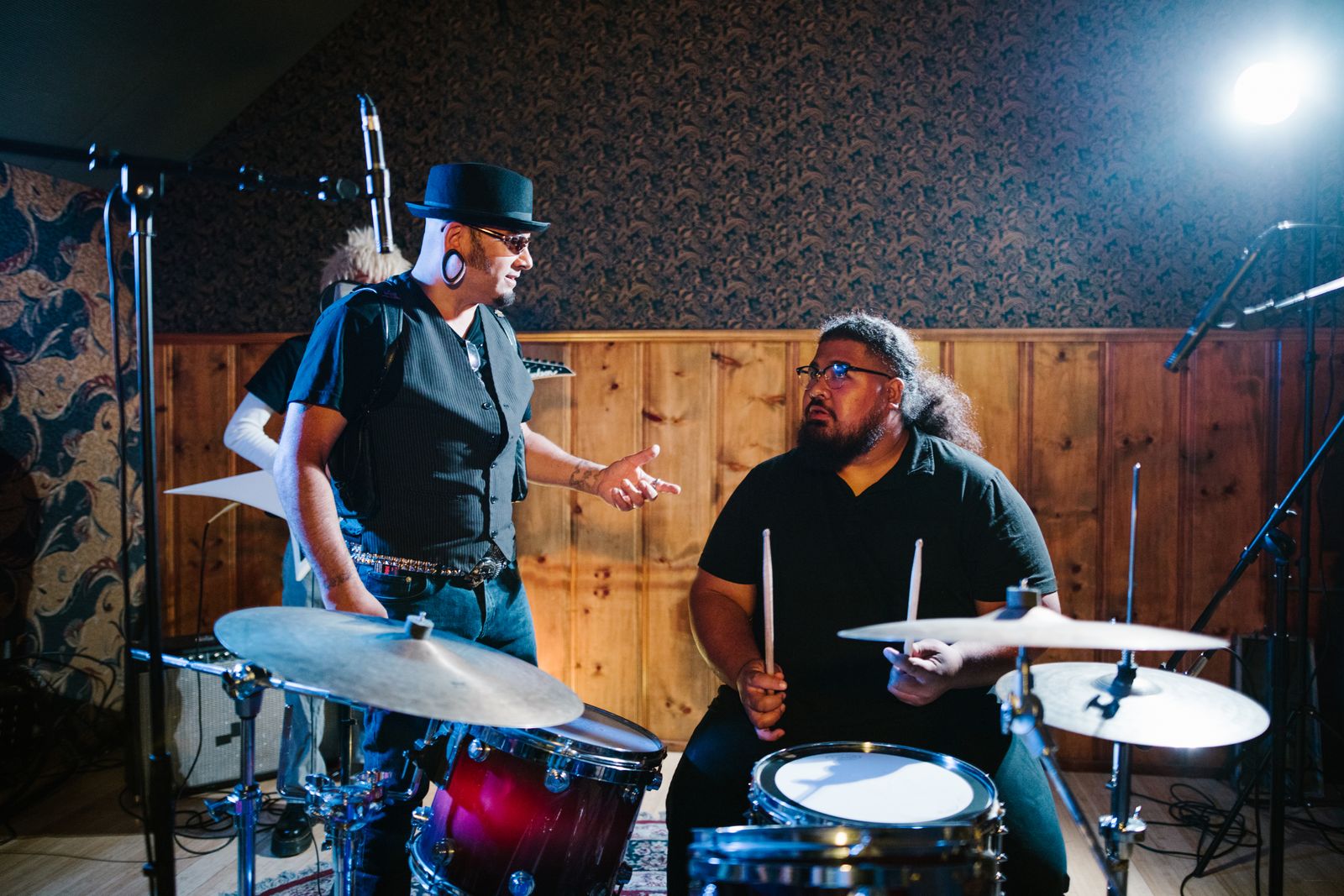
Three months is enough time to go from never having touched a drum kit to playing along to songs you know. Not perfectly. Not fast. But genuinely — in a way that feels like music rather than random noise.
Here's what that arc actually looks like, and what determines how quickly you move through it.
Month One: The Foundations
The first month is about building the physical and rhythmic base that everything else sits on.
Week one is posture, grip, and the first beat. How you hold the sticks, how you sit at the kit, how the bass drum pedal feels under your foot. Then the basic rock beat: hi-hat keeping steady time, snare on beats two and four, bass drum on one and three. Most students get all three layers in the first lesson, or close to it.
Weeks two and three are about making that beat consistent. Ten seconds of clean rhythm is the goal, then thirty, then a full minute without falling apart. This sounds simple. It isn't. Your hands and feet are doing different things simultaneously for the first time, and the brain takes time to automate it.
By week four, we start varying the bass drum pattern. The snare stays on two and four. The bass drum moves. This is where it starts to sound like different songs rather than one default beat.
What you'll leave month one with: one solid beat, correct grip and posture, a sense of how the kit is laid out, and a home practice routine.
Month Two: Expanding the Vocabulary

Month two adds the pieces that turn a beat into music.
Fills. A fill is what happens between sections of a song. You've heard them thousands of times: the little drum phrase that transitions from verse to chorus. In month two we build the first simple fills and start connecting them to the beat.
More bass drum patterns. The bass drum is the voice that most separates different styles. A funk groove looks completely different from a rock groove at the bass drum level. In month two we start exploring that range.
Playing along to actual songs. This is the moment things shift. You put on a track you know, you find the beat, and you play with it. Not perfectly — but recognisably. Students often describe this as the moment drumming stops feeling like an exercise and starts feeling like music.
What you'll leave month two with: three to five distinct rhythmic patterns, basic fills, and the experience of playing along to music you've chosen.
Month Three: Consolidation
Month three is less about adding new material and more about making what you have reliable.
Tempo consistency. Playing a beat at a fixed tempo, without rushing or dragging, is harder than it sounds. A metronome becomes a regular part of practice. This is not glamorous work — it's the work that makes everything else sound good.
Dynamics. Not everything needs to be played at the same volume. Month three introduces the difference between playing loud and playing controlled. Cymbal swells, quiet verse patterns, powerful chorus hits.
By the end of month three, most students can play through several songs from start to finish — with fills, with transitions, with some dynamic variation. The kit has stopped feeling like an obstacle and started feeling like something they can navigate.
What Determines Your Pace
Two things matter more than anything else.
Home practice frequency. Twenty minutes a day, five days a week, produces significantly more progress than one two-hour session on Sunday. The brain consolidates motor patterns during rest. Short daily sessions beat long weekly ones, consistently.
Lesson regularity. Weekly lessons allow us to catch problems before they become habits. A student who comes every two weeks sometimes arrives having reinforced a mistake for fourteen days. That's fixable — but it costs time.
Prior musical experience helps somewhat. People who've played another instrument understand rhythm and counting. But it's not a prerequisite. Some of my fastest-progressing students came with zero musical background.
What You Won't Learn in Three Months
Honesty matters here.
Three months won't give you the stamina to play a full 45-minute set. It won't give you the coordination for complex jazz patterns or double kick technique. It won't make you sound like the drummer on your favourite record.
What it gives you is a real foundation — technique that works, habits that don't need to be unlearned, and a clear sense of what the next six months look like. That's the point of the first three months. Not mastery. A solid start.
If you'd like to start that arc — the trial lesson is the right first step. Forty-five minutes, €10, no commitment.